Showing posts with label Roger Moore. Show all posts
Showing posts with label Roger Moore. Show all posts
Tuesday, November 3, 2015

Monday, August 19, 2013
World Of Bond Product Review: 007 Signature Fragrance For Men
World Of Bond Product Review:
007 Signature Fragrance For Men


 This leads to the invariable question, "Would James Bond, in any of his various incarnations, wear a men's fragrance that bore his name, or even the fragrance of some other character of iconic status?" The answer is probably not. Regardless of this response, I decided to broaden my thought processes in order to justify a purchase of this product. So the next question I asked myself was "Does this product respect the sensibility of the true James Bond Fan?". The only way to answer this question, I decided, was to purchase the product and find out.
 The product is carried in the United States in Kohl's Department Stores. The packaging and bottle are sharp and aesthetically pleasing. The bottle has the 007 License to Kill embossed on the side of the glass bottle with a veiled, disappearing spray guard for the nozzle. The packaging includes a personal, numerical, code which unlocks some additional video footage about the product on the Fragrance's website. All in all, I think the packaging and thoughtful design are really in line with the James Bond style and masculine character. I approve.

As for the fragrance itself, I believe this is a very subjective determination; however, I tried to judge the fragrance on the standard of whether or not I would purchase the fragrance, again, if it were not a James Bond collectible, which makes it worth an initial purchase, for certain. The answer to that question is yes. The scent is appealing and masculine. It subtly stays with you and stays aromatic without being overpowering at any point.

So, in conclusion, while I am not sure it is the fragrance James Bond would wear, it does treat the culture of Bond, and its fan base respectfully, and it is my new fragrance of choice.
Friday, July 26, 2013
8 Fun Facts About James Bond-Vol. 2
8 Fun Facts About James Bond-Vol. 2
July 26, 2013- Here is our second installment in the 8 Fun Facts About James Bond series. Enjoy.

1. Ian Fleming's novel, The Spy Who Loved Me, (1962) has the distinction of being one of the least popular and most critically despised novels in the James Bond series. This experimental tale is told from the perspective of the lead character, Viv Michele, a Canadian woman. 007 does not even appear in the story until the final third of the novel. The 1977 Roger Moore film of the same name has no plot or character elements from the novel whatsoever.
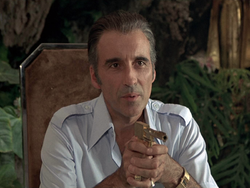 2. Christopher Lee, British film actor who began his career in the 1940's, and has starred as such great film characters as Dracula, Saramun the White, Count Dooku and 100's more, played James Bond villain, Francisco Scaramanga in 1974's The Man With The Golden Gun. Lee was the first cousin to James Bond novelist, Ian Fleming, who never lived to see Lee play the part.
2. Christopher Lee, British film actor who began his career in the 1940's, and has starred as such great film characters as Dracula, Saramun the White, Count Dooku and 100's more, played James Bond villain, Francisco Scaramanga in 1974's The Man With The Golden Gun. Lee was the first cousin to James Bond novelist, Ian Fleming, who never lived to see Lee play the part. 3. The voices of the actors playing Bond villains, Auric Goldfinger and Emilio Largo, played by Gert Frobe and Aldolfo Celi, respectively, in the films Goldfinger (1964) and Thunderball (1965), were dubbed for the films due to the belief that audiences would find their think accents difficult to understand.
4. Here is some insight into the universal impact that one movie series can have on the world. It is estimated that more than one half of the entire world's population has seen, at least, one of the James Bond films. This statistic may make James Bond the single most recognizable fictional character in the history of the world.
 5. Two universally recognized associations of the James Bond character are that his drink of choice is a martini, "shaken, not stirred" and that he drives an Aston Martin, yet neither appears in any of the Sir Roger Moore films. Moore felt distancing himself with certain associations of Sean Connery's version of the character would allow him to carve out his own, distinct persona as Bond.
 6. Sean Connery faces the issuance of an arrest warrant in Spain if he fails to appear to testify, before the end of the year, in a corruption investigation involving the sale of a home in Marbella, Spain to developers several years ago. The property was later demolished and a scandal over zoning laws, money laundering, and political corruption ensued. To date, Connery has refused to appear.
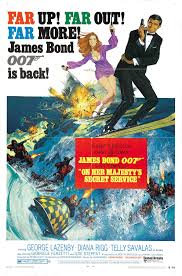
7. George Lazenby, star of 1969's On Her Majesty's Secret Service, was a Used Car salesman prior to being selected to fill Sean Connery's shoes in the role of the world's most famous secret agent.
8. Skyfall (2012), the 23rd installment in the James Bond film series just surpassed Avatar (2009) as the highest grossing film ever in the history of Great Britain.

I'd love to hear from you with any Fun Facts, or story ideas....
Thursday, July 18, 2013
Book Review: Bond on Bond by Sir Roger Moore
Book Review: Bond on Bond by Sir Roger Moore


Moore tells the story of the transition of James Bond from the fictional character of the Ian Fleming novels to the central character of the longest running film franchise in movie history. This is all done through Roger Moore's eyes, and in his unique voice. Moore provides a chronological perspective and a "behind the scenes" look at the how the Eon Productions' team created the winning James Bond formula, and what it has taken to sustain it through 50 years, 23 films, and 6 Bond Actors.
 Bond on Bond includes chapters on the Gadgets, the Villains, the Bond Girls, and even, one on James Bond's style. It is light hearted, self effacing and filled with personal narratives, opinion, and touching tributes to many of the individual actors and professionals that have passed on from the long history of Bond film making. Moore provides a wealth of information and trivia in an easy to read, visually pleasing format.

Bond on Bond is a fun, fact filled, trip through 50 years of Bond film history. Moore is an excellent tour guide and this book is a must for any Bond Fan.

Friday, July 12, 2013
COMING SOON-Book Review: Sir Roger Moore's Bond on Bond
COMING SOON-Book Review: Roger Moore's Bond on Bond

July 12, 2013- In our next installment of the World of Bond we review last year's coffee table selection, Bond on Bond, by Sir Roger Moore. The actor who played the role of the world's most famous secret agent for the longest period in history recounts 50 years of the longest running film franchise in history.
Stay Tuned...
Wednesday, June 5, 2013
Your Favorite Bond Is.....
Your Favorite Bond Is.....

 The votes have been cast and tabulated in The World of Bond's Which Bond Is Your Favorite contest. For some this may be one of the most significant elections of the 21st Century (For James Bond Fans that is). Our readers were asked to choose their favorite actor, who played James Bond, from among the Eon Productions' film Bonds; from Sean Connery to Daniel Craig. Our readers have, overwhelmingly, selected Daniel Craig as their favorite Bond Actor.
 What does Craig's selection tell us about the modern Bond audience? It may reveal that the modern Bond fan appreciates the dramatic, gritty, course that the series has embarked upon since Craig's elevation to the role with 2006's Casino Royale. It may be evidence that the current crop of Bond fans are traditionalists that harken for the three dimensional, flawed character of the Ian Fleming novels and short stories founded on a bedrock of strong spy stories, rather than the the two dimensional Roger Moorish character films that degenerated into formula films relying too heavily on one liners, gadgets, and gimmickry. Craig, in only three film installments, delivers this traditional Bond for the new age.
 This selection of Daniel Craig is not a huge surprise when one looks at the financial and critical success garnered by Skyfall, the 23rd installment in the James Bond movie series, and the most successful by any standards used to measure success. It is also not a surprise when one looks at the current actor and winner who, to some, not only plays Bond but is Bond. Despite the early skepticism over the selection of Craig as Pierce Brosnan's replacement, he quickly won the attention of fans, film critics and the broader movie audience by playing the role with believable grit, intelligence, and masculine sex appeal. Perhaps it was Craig's training on the British stage, television, and films that prepared him to fill the role so adeptly. Regardless, as we approach the 24th installment of the franchise and rumors of the return of Sam Mendes as the film's Director and the casting of the beautiful, Penelope Cruz as the latest "Bond Girl" circulate, one thing is for certain, Daniel Craig will return as James Bond.

Tuesday, May 21, 2013
Which James Bond Is Your Favorite?
Which James Bond Is Your Favorite?
While I certainly have my own opinion about who is the best Film James Bond, I decided to give my readers an opportunity to vote and have their voice be heard on this important debate among Bond aficionados. I limited the choice to the Eon Productions' Bonds to provide a more even playing field among the choices. On June 1, 2013 the results will be published and the winning Bond will be the subject of a feature story in The World of Bond. Who will the public choose:
Sean Connery? Daniel Craig? George Lazenby?
We will soon find out.

May 21, 2013
Thursday, May 9, 2013
The Fighting Style of James Bond
Anyone who is familiar with the novels or films featuring the James Bond character knows that although 007 is an unmatched sharpshooter with his Beretta and later, his famed Walter PPK, he is also very capable of defending himself in an unarmed, hand to hand situation. Virtually every work has him, at some point, squaring off with an opponent, or henchman without the aid of a firearm. So what fighting style is Britain's favorite fictional son skilled in? Kung Fu? Jui-Jitsu? Taekwondo perhaps? Even as a Bond fanatic over the years, I never really, seriously contemplated this question until now. While the answer may vary slightly from Bond persona to Bond persona, it seems 007 may have been a real frontrunner in the Mixed Martial Arts (MMA) arena before it was even called MMA, and he is certainly a man whose hands are to be feared.

Going back to the source material, as I always do, Ian Fleming's Bond references our hero training in British Naval Intelligence. This training would, likely, be a form of what has been referred to as Close Quarters Battle Combat, an unorthodox, little documented fighting style that involves deadly blows and the use of economic, crippling strikes which can be executed in close proximity to an opponent when locked in close combat, hence its name. There is also some reference to boxing in his youth and, later in the military which is evidenced throughout all the Bond personas with his striking blows. Fleming's Bond also references some Combat Judo training. Eastern style Martial Arts training is very common today in the West. Varied styles, from Karate to Taekwondo to Competitive MMA, are taught throughout Europe and the United States; however, this was not the case in Fleming's day. Martial Arts study was a closely guarded secret of the East and many Asian countries had strict prohibitions on teaching their secret arts to Westerners. It is no surprise, with Fleming's background, that Bond was a well versed combatant with his hands and in the Asian martial arts. He adeptly kills his arch-nemesis, Blofeld, in the epic novel On Her Majesty's Secret Service, not with an assassin's bullet but with his bare hands. Fleming's Bond is a dangerous secret agent with, or without, a weapon.

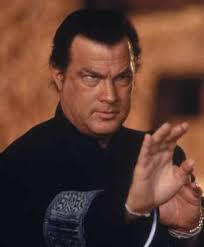 Sean Connery is heralded, in the pre-Daniel Craig era, as a tough guy without question. Connery even did many of his own Bond stunts. Connery, himself, was a student of Karate, and his swagger, confidence, and skill are evident in his portrayal of Bond. His Bond persona was good with his hands, whether it was defending himself against Red Grant in From Russian With Love (1963), or his prowess in the deadly elevator fight in Diamonds Are Forever (1971). In You Only Live Twice (1967) Bond's Judo skills are evidenced in many of the fight sequences in Japan and, later, he is trained in the art of Ninjitsu, under the supervision of Tiger Tanaka, in preparation of his infiltration of Blofeld's Volanic hideaway. One of the widely and wildly circulated story's emanating from Connery's return to Bond in the non-Eon Productions Thunderball (1965) remake, Never Say Never Again (1983), is that Connery is alleged to have had his wrist broken while undergoing martial arts instruction, and a possible disagreement with, non other than Steven Seagal. In true Connery "tough guy" fashion he ignored the pain until well after the production was wrapped on the film, only to discover that lingering pain was a broken wrist.
While Roger Moore always appeared to be more concerned about his hair and appearance to get his hands dirty, he was, in fact, an adept Karate student of Aaron Banks. There are numbers of hand to hand sequences in the Moore films, many include "karate chops" and some low kicks and many campy uses of props but his fight scenes never reach the intensity and grit of Connery's, or later, Craig's, fight scenes. Moore understood his limitations in this area, and opted for cunning rather than grit in gaining the upper hand on his opponents in hand to hand combat scenes. The series aided this paradigm by introducing characters such as Tee-Hee of Live and Let Die (1973) and Jaws from The Spy Who Loved Me (1977)and Moonraker (1979) to make Moore's mortal fighting deficit seem less personal in light of these super-villains extraordinary strength and size.


Like many other aspects of the film series neither Timothy Dalton nor Pierce Brosnan made very memorable contributions in the perpetuation of Bond's reputation as a skilled hand to hand combat expert. Dalton is a grittier in his portrayal and more believable as a hand to hand tactician. Brosnan is clearly the most debonair of the Bond actors, but he is the least believable in the "mano-a-mano" arena unless you consider George Lazenby's fighting style, which I choose not to ever consider. Both Bonds hold their own with their hands when appropriate but neither performance had audiences hankering to learn to fight like Bond.
 After these lackluster years for lovers of good, manly combat scenes along came Daniel Craig, a gritty, brawler who is skilled in the lethal art of Krav Maga, the martial art of choice of the Israeli Defense Forces. This lethal art combines kickboxing, karate, wrestling, street fighting and Close Quarter Combat. Craig was trained by Darren Levine, founder of Krav Maga Worldwide. The emphasis in Krav Maga is "continuous motion" and this emphasis is exhibited in dynamic form in the amazingly memorable and riveting scenes in Casino Royale (2006) as the one were Bond does mortal combat with Obanno and his Ugandan mercenaries who are are seeking a return of their funds from Le Chiffre one way or another. Craig is believable in the role and believable in the fight scenes. These fight scenes have moved beyond the formula, and sometimes gimmicky, fight sequences audiences had become used to in Bond films and, like the film, into a new grittier, dramatic World of James Bond. These fight sequences are engaging, brutal good film making and remind us that, while Bond is far from a super hero, he is a dangerous and skilled combatant.
Jeffrey Deaver's outstanding James Bond treatment Carte Blanche delivers us a gritty, Craig-like Bond who is skilled in the art of Systema, a Russian fighting style that is designed for close quarters and defense against guns and knives. The key in Systema is the use of an opponent's own energy against them and the focus on key pressure point areas of the elbows, neck, knees, waist, ankles and shoulders to control them. Systema fighters exert little energy and move very efficiently, often giving them the ability to outlast their opponents before crippling them with their effective striking points. Deaver graphically depicts several fight scenes in his novel with such color that one can envision them taking place. In fact, his depiction was so colorful it immediately drove me to seek out and observe the work of Martin Wheeler, one of the foremost Systema practitioners and teachers in the world in the hopes of learning more. For true Bond Traditionalists they would rather see Bond fight an opponent with his hands than with his exploding pen, and Deaver gets it.
James Bond, at his core, is a government assassin. Whether it is under Fleming's "License to Kill" or Deaver's "Protect the Realm...by any means necessary" Bond is is a deadly force to be reckoned with. When most people think of James Bond, they envision the iconic opening sequences of so many of the Eon Production films where Bond turns, fires a single shot, and blood runs down the frame. While there is no question that Bond's skills with a gun are unmatched, he is equally deadly in a close contact combat situation with his hands. Given a choice, which Bond would you stand the best chance of holding your own against in a fight?
-->
Going back to the source material, as I always do, Ian Fleming's Bond references our hero training in British Naval Intelligence. This training would, likely, be a form of what has been referred to as Close Quarters Battle Combat, an unorthodox, little documented fighting style that involves deadly blows and the use of economic, crippling strikes which can be executed in close proximity to an opponent when locked in close combat, hence its name. There is also some reference to boxing in his youth and, later in the military which is evidenced throughout all the Bond personas with his striking blows. Fleming's Bond also references some Combat Judo training. Eastern style Martial Arts training is very common today in the West. Varied styles, from Karate to Taekwondo to Competitive MMA, are taught throughout Europe and the United States; however, this was not the case in Fleming's day. Martial Arts study was a closely guarded secret of the East and many Asian countries had strict prohibitions on teaching their secret arts to Westerners. It is no surprise, with Fleming's background, that Bond was a well versed combatant with his hands and in the Asian martial arts. He adeptly kills his arch-nemesis, Blofeld, in the epic novel On Her Majesty's Secret Service, not with an assassin's bullet but with his bare hands. Fleming's Bond is a dangerous secret agent with, or without, a weapon.
Sean Connery is heralded, in the pre-Daniel Craig era, as a tough guy without question. Connery even did many of his own Bond stunts. Connery, himself, was a student of Karate, and his swagger, confidence, and skill are evident in his portrayal of Bond. His Bond persona was good with his hands, whether it was defending himself against Red Grant in From Russian With Love (1963), or his prowess in the deadly elevator fight in Diamonds Are Forever (1971). In You Only Live Twice (1967) Bond's Judo skills are evidenced in many of the fight sequences in Japan and, later, he is trained in the art of Ninjitsu, under the supervision of Tiger Tanaka, in preparation of his infiltration of Blofeld's Volanic hideaway. One of the widely and wildly circulated story's emanating from Connery's return to Bond in the non-Eon Productions Thunderball (1965) remake, Never Say Never Again (1983), is that Connery is alleged to have had his wrist broken while undergoing martial arts instruction, and a possible disagreement with, non other than Steven Seagal. In true Connery "tough guy" fashion he ignored the pain until well after the production was wrapped on the film, only to discover that lingering pain was a broken wrist.While Roger Moore always appeared to be more concerned about his hair and appearance to get his hands dirty, he was, in fact, an adept Karate student of Aaron Banks. There are numbers of hand to hand sequences in the Moore films, many include "karate chops" and some low kicks and many campy uses of props but his fight scenes never reach the intensity and grit of Connery's, or later, Craig's, fight scenes. Moore understood his limitations in this area, and opted for cunning rather than grit in gaining the upper hand on his opponents in hand to hand combat scenes. The series aided this paradigm by introducing characters such as Tee-Hee of Live and Let Die (1973) and Jaws from The Spy Who Loved Me (1977)and Moonraker (1979) to make Moore's mortal fighting deficit seem less personal in light of these super-villains extraordinary strength and size.
Like many other aspects of the film series neither Timothy Dalton nor Pierce Brosnan made very memorable contributions in the perpetuation of Bond's reputation as a skilled hand to hand combat expert. Dalton is a grittier in his portrayal and more believable as a hand to hand tactician. Brosnan is clearly the most debonair of the Bond actors, but he is the least believable in the "mano-a-mano" arena unless you consider George Lazenby's fighting style, which I choose not to ever consider. Both Bonds hold their own with their hands when appropriate but neither performance had audiences hankering to learn to fight like Bond.
After these lackluster years for lovers of good, manly combat scenes along came Daniel Craig, a gritty, brawler who is skilled in the lethal art of Krav Maga, the martial art of choice of the Israeli Defense Forces. This lethal art combines kickboxing, karate, wrestling, street fighting and Close Quarter Combat. Craig was trained by Darren Levine, founder of Krav Maga Worldwide. The emphasis in Krav Maga is "continuous motion" and this emphasis is exhibited in dynamic form in the amazingly memorable and riveting scenes in Casino Royale (2006) as the one were Bond does mortal combat with Obanno and his Ugandan mercenaries who are are seeking a return of their funds from Le Chiffre one way or another. Craig is believable in the role and believable in the fight scenes. These fight scenes have moved beyond the formula, and sometimes gimmicky, fight sequences audiences had become used to in Bond films and, like the film, into a new grittier, dramatic World of James Bond. These fight sequences are engaging, brutal good film making and remind us that, while Bond is far from a super hero, he is a dangerous and skilled combatant.Jeffrey Deaver's outstanding James Bond treatment Carte Blanche delivers us a gritty, Craig-like Bond who is skilled in the art of Systema, a Russian fighting style that is designed for close quarters and defense against guns and knives. The key in Systema is the use of an opponent's own energy against them and the focus on key pressure point areas of the elbows, neck, knees, waist, ankles and shoulders to control them. Systema fighters exert little energy and move very efficiently, often giving them the ability to outlast their opponents before crippling them with their effective striking points. Deaver graphically depicts several fight scenes in his novel with such color that one can envision them taking place. In fact, his depiction was so colorful it immediately drove me to seek out and observe the work of Martin Wheeler, one of the foremost Systema practitioners and teachers in the world in the hopes of learning more. For true Bond Traditionalists they would rather see Bond fight an opponent with his hands than with his exploding pen, and Deaver gets it.
James Bond, at his core, is a government assassin. Whether it is under Fleming's "License to Kill" or Deaver's "Protect the Realm...by any means necessary" Bond is is a deadly force to be reckoned with. When most people think of James Bond, they envision the iconic opening sequences of so many of the Eon Production films where Bond turns, fires a single shot, and blood runs down the frame. While there is no question that Bond's skills with a gun are unmatched, he is equally deadly in a close contact combat situation with his hands. Given a choice, which Bond would you stand the best chance of holding your own against in a fight?
-->
Friday, May 3, 2013
Random News From The World Of James Bond
Random News From The World Of James Bond
It seems like only yesterday that George Lazenby's agent advised him that the heyday of James Bond popularity was past. Now, just a mere 43 years later, every single day is filled with interesting news and happenings about the world and phenomenon known as James Bond. Here are just a few noteworthy items:
 1. Subscribers to Netflix were outraged to learn that they were losing access to all of the James Bond Film Collection, plus many more titles owned by MGM Studios, effective May 1, 2013 as a result of an attempt to foster parent company, Warner Bros.'s, competing service by making these products exclusive. This decision was bad for Netflix fans but it demonstrates that the Bond Films are still a valuable asset to any film collection.
 2. Wanna drive around town like 007? Well the opportunity to live the secret agent's lifestyle may be at hand in not just one, but two, separate sales of famous Bond Aston Martins. Sean Connery's iconic car of Goldfinger and Thunderball is yours to own for a mere $4.7 million dollars "fully loaded". If the classic is a little beyond your budget, there is still a shot at the rare, Aston Martin V8 Volante driven by Timothy Dalton in 1987's The Living Daylights for sale by Classic Driver for considerably less.
 3. Sir Roger Moore is lending his star power to celebrating the 20th Anniversary of the founding of STARS (Syncope Trust and Reflex Anoxic Seizures). This charity, an international organization, has assisted 50,000 people since it's inception who suffer from unexplained blackouts. Sir Roger suffered one such blackout in 2003 due to a later diagnosed, low heart rate. The installation of a pacemaker helped him to address this problem and he has committed himself to spreading the word about the foundation's good work. That is up there with the most heroic of Bond's deeds.
4. Pierce Brosnan, in a recent interview surrounding the opening of his new film "Love Is All You Need", had high praise for Daniel Craig's portrayal of the world's most famous secret agent. "..I loved it. I did. I really did. I've covered a lot of ground since playing James Bond. I knew Daniel. We passed in the night..and we spoke about life and how wonderful it was for him to do 007." As for his time playing Bond, "Bond was a glorious time for me. I have nothing but gratitude for having played such a role...and Daniel is magnificent."

Brosnan really gets it. His perspective on playing Bond in a difficult transitional time, where so much of the source material was experimental and where the public and the producers were unsure of what Bond-type they were looking to associate the series, with is terrific. "My era of playing Bond was still a cross-pollination of Sean Connery and Roger Moore. They hadn't made the leap into the next phase: the huge action, and more Brutal Bond." In retrospect, I think this open minded, embracing perspective is one of the reasons why, although the source materials for his Bond films were not all that memorable, his portrayal of the character was infinitely more likable than his immediate predecessor.
 5. George Lazenby really doesn't seem to get it at all. In a recent interview for Entertainment Tonight he talks about his decision not to return to the role of James Bond, not because he was lackluster in the role, but because the days of Bond were winding down. That was 43 three years ago, and here we are with the series making a robust comeback. In fairness to Lazenby he succeeded the iconic Sean Connery, who was inextricably linked to the character itself. He also was faced with a time period which he referred to as "the hippie era" and it was hard for him to see the clean cut Bond character competing in the movie world alongside an "Easy Rider" movie audience. Falling in step with the other Bonds, however, Lazenby did praise Craig's acting in the lead role, although he longs for license to kill who "could still shed a tear over someone dying". Maybe that is the major difference between Craig and Lazenby's portrayal of Bond; Lazenby longs for a 007 who sheds a tear with every killing and Craig, to quote Casino Royale "...wouldn't be very good at my job if I did." I am with Craig.
More news for the World Of James Bond to follow....
Saturday, April 27, 2013
An Open Letter of Apology to Jeffrey Deaver
An Open Letter of Apology to Jeffrey Deaver

Let's start out with the admission of my guilt: I was wrong!. There, I have said it (or written it). I waited three years from it's publication to read Jeffrey Deaver's authorized James Bond novel, Carte Blanche, because I, stubbornly, refused to allow myself to buy into the notion that anyone other than Ian Fleming could write a good Bond spy novel. I foolishly believed that reading a Bond novel written by anyone but Fleming was, somehow, a betrayal of the legacy; that reading a non-Fleming work was buying into a cheap attempt to cash in on the Bond-starved fan base's desire for ANYTHING Bond.
In Deaver's contemporary setting we meet a younger Bond, in his 30's, who still carries his "00" status but within a re-tooled agency more fitted to the post 9/11 world than to the Cold War of Fleming and the early films. Bond's directive seems to be broader and his role more suited to identify and eliminate threats to the country by extraordinary means" than his historical "license to kill" directive. The adventure brings him to Serbia, London, Dubai and South Africa in an attempt to uncover and foil a terrorist strike whose complexity unfolds as the novel progresses, climaxing with an exciting plot twist. Deaver returns back to the Fleming tradition of using contemporary world settings as a backdrop for third party madmen and financially driven terrorists to flourish as they create their own brand of Chaos. Severan Hydt and Nial Dunne hearken back to the days of Dr. No, Goldfinger, and even Ernst Stavro Blofeld.
No Bond book or movie would be complete without its iconic female characters and Deaver's is no exception. Whether's it's a fixture, like Ms. Moneypenny, or a newcomer like Bheka Jordaan, the Female characters, and there are many, are strong, dynamic, three-dimensional women. These woman are not mere wallpaper, but integral parts of the story. They are the new breed of Bond Girls and I think they are here to stay.
The book is also rich with some staple characters, such a the M, Felix Leiter, Mary Goodnight, and a retrofitting of the classic "Q" character in the rich, energetic Sanu Hirani. The presence of these foundational, source characters do a lot to anchor the reader in the fact that even though the setting and the agency have been updated, that we are still in the world of Ian Fleming's James Bond. Deaver's treatment of these characters are fitting tributes to the iconic characters.
No treatment of Carte Blanche would be fair and complete without a discussion of Deaver's treatment of Bond himself. The novel rises, or would have fallen, on Deaver's interpretation and presentation of the character. In an interview about this very topic Deaver discussed the difficulty of finding the balance between the Fleming Bond of the original novels and the Bond of film. The public's exposure to fifty (50) years of Bond films makes the film presentation of the character far more familiar; however, which film Bond was Deaver to present: Connery? Craig? Moore? or, maybe, Dalton or Brosnan? Finally, Deaver is an American writer and Fleming wrote in a distinctly British tone. Could Deaver capture a British tone without the work becoming satirical?
So how did Deaver overcome these issues in order to create a viable Bond true to the Fleming legacy, that would still satisfy movie aficionados? He accomplished this in two ways. First, he stayed very true to the basic nature of Bond; light on the gimmicks, serious but with a sense of humor, flawed, a loner, passionate with a strong moral center, unmatched skills, and intellect. He also left enough of the character's edges undefined that the reader, if familiar with the Bond films, could individually plug in their favorite James Bond and the story would still work. I actually experimented with this concept in the midst of my reading by consciously envisioning Roger Moore's Bond in the lead, despite the fact that I was naturally envisioning Daniel Craig as I read, and, I must admit, I was able to comfortably do so. This is the gift of artful writing and I could see this work being easily converted into a screenplay for a future Bond motion picture.
In the final analysis, Jeffrey Deaver delivered a well written, intriguing, exciting, gritty, James Bond Novel that made it hard to put down. I found myself sad to finish it and, equally sad with the knowledge that Deaver will contribute no other novels to the Bond Collection. William Boyd's Solo, the next authorized James Bond novel, will return the Cold War Bond. If he is able to capture the essence of the character nearly as well as Deaver, the book will be a huge success.
- ISBN-13: 9781451620696
- Publisher: Simon & Schuster
- Publication date: 6/14/201
Wednesday, April 24, 2013
The Five (5) Most Disappointing Films
The Five (5) Most Disappointing Films
In preparation for my last blog post, The Top Five (5) James Bond Films Of All Time, I went back and watched the entire catalogue of Bond Films again. What struck me most was how disappointing so many of them were. I use the term "Disappointing"very consciously because, while I loved all of them when I saw them originally, and don't think any were truly bad, I was disappointed by many of them in my recent viewing. This is why I choose not to use the term "Worst" in this positing; it is too pejorative for my taste.
So what has changed from my original perspectives on the works? I think my disappointment stems from a combination of several factors; namely:
1. I have aged and, hopefully, matured and so have my tastes. The more juvenile the content of some of the Bond films, the less I connect to them . Bond started out as chauvinistic, gritty, adult themed series and devolved into a quasi-comedic, teenage action series as the films departed from the Sean Connery Era. This was disappointing.
2. I have become so much more familiar with the written word of Ian Fleming that the more a film varies from the essence and character of the source material the less I regard it;
3. In the pre-Daniel Craig era, I think, my expectations had diminished so much that I stopped holding the films out to high standards. The question became "Is this a good Bond movie?" and not "Is this a good movie?" when judging the series. The Daniel Craig films reminded me that, at its heart, the Bond films, originally, were good movies that held their own as such and that is how they should be judged.
With those fundamentals being laid out, here is my list of the most disappointing James Bond films in the Eon Productions Era:
 5. The Living Daylights (1987): The fact is that there are elements of Timothy Dalton's portrayal of James Bond, in his first appearance as the iconic 007, that are redeeming. His edgier than Moore interpretation of the character was actually refreshing, but not refreshing enough. I struggled over determining which of the two Dalton Bond Films was more disappointing. In the final analysis, after seeing The Living Daylights, I was so disappointed that such a great opportunity to transform and resurrect the franchise was squandered, that it was hard to be more disappointed by subsequent films in the Dalton era. The essential defects revolve around an identity crisis for a franchise in transition. I think the move to a grittier Bond was a smart contrast to Moore's light-hearted hero, but the complexion of the rest of the film is not entirely in sync with this posture. Joe Don Baker's, over the top, campy, ridiculous performance as Brad Whitaker is among the worst in the film franchise's history. Maryam d'Abo's performance, like much of the film, is just flat as the Cellist Kara Milovy. Is this a terrible film-no; but the opportunities squandered at this critical time in the franchise's chronology is what is so disappointing.
 4. License to Kill (1989): While this film is better than it's predecessor, mostly due to a grittier, more Fleming based portrayal by Timothy Dalton in the lead role, the film just never really manages to impress. The plot, with loose ties to several Fleming sources, revolves around Bond seeking revenge for a brutal attack on CIA Agent and friend, Felix Leiter and his wife, by henchman of Robert Davi's Villain, Franz Sanchez, who's performance is one of the admirable parts of the film. Despite strong elements the film never seems to find it's own identity and, despite the minimization of the camp of earlier films, the film seems to just be moving along without any real enthusiasm. The fact is that, despite the flaws of Moore's last few Bond Films, he still brought his own charm to the character. In fact, his later films relied too much on that charm and not enough on other elements. The Dalton films lack dimension and character as films and Dalton disappoints because the foundations of his Bond portrayal lend themselves much more closely to the Fleming, Connery and, later, Craig, interpretation of the character but he never builds on that strong, fundamental attachment to the original character.
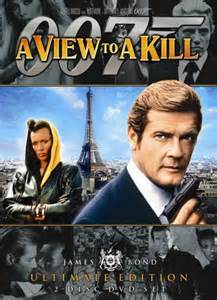 3. A View To a Kill (1985) This last installment of the series starring Roger Moore came, at least, one film too late. Named after an Ian Fleming short story of the same name, this film has nothing to do with that source work. Once again, the further the Bond films stray from the source material, in substance and in essence, the bigger the disappointment they are, in my humble opinion. Christopher Walken's portrayal of Max Zorin is the most redeeming part of the film. While many critics commented on Moore's portrayal of Bond as a 57 year old as problematic, I think the real failure was not to address the aging Bond within the context of the film, rather than dismissing the obvious and having him portray Bond as much younger character with little credibility. Tanya Roberts, Grace Jones, and Richard Kiel represent the epitome of bad acting and camp and do nothing to support this installment.
 2. Moonraker (1979): Christopher Null of FilmCritic.com said everything that needs to be said about this film, "Most rational observers agree that Moonraker is without a doubt the most absurd James Bond movie, definitely of the Roger Moore era and possibly of all time". Once again the significant variation from Fleming's source material combined with campy, comedic gags, over the top gimmicks, and two dimensional characters really disappointed. One of the most significant criticisms of the film is that it suffers from an identity crisis. While the film was released in the Star Wars era the effort to have the film compete with that genre transformed Bond, even if only for this film, from a trendsetter to a wannabe in the film industry. Moonraker could have been an exciting, action packed Moore portrayal if it tried to stay true to what made Bond movies so beloved.
 1. On Her Majesty's Secret Service (1969): This film is the greatest Bond Disappointment of all time. The source material is the second book in what has become to be known as "The Blofed Trilogy". For many literary critics the written source is the greatest of all the Fleming Bond books, perhaps setting any film interpretation up for failure. Despite the fact that the plot is very close to the original Fleming work of the same name, the execution is where the film falls short. George Lazenby, sandwiched between two Sean Connery appearances falls flat in his portrayal of Bond. His character does not have the grit or depth of his predecessor, and lacks the charm of his successors. The fight sequences are not well choreographed, the music is more suited to a 70's romance, and the film-making is "B-Movie" quality at best. I have tried to watch and re-watch this film over the years with an open mind but it does not improve with age. Perhaps I judge this film too harshly, but I loved the novel and I loved Connery as Bond and this installment diverges so far from either of those that it may not be the worst but it is the most disappointing, by far.
So what has changed from my original perspectives on the works? I think my disappointment stems from a combination of several factors; namely:
1. I have aged and, hopefully, matured and so have my tastes. The more juvenile the content of some of the Bond films, the less I connect to them . Bond started out as chauvinistic, gritty, adult themed series and devolved into a quasi-comedic, teenage action series as the films departed from the Sean Connery Era. This was disappointing.
2. I have become so much more familiar with the written word of Ian Fleming that the more a film varies from the essence and character of the source material the less I regard it;
3. In the pre-Daniel Craig era, I think, my expectations had diminished so much that I stopped holding the films out to high standards. The question became "Is this a good Bond movie?" and not "Is this a good movie?" when judging the series. The Daniel Craig films reminded me that, at its heart, the Bond films, originally, were good movies that held their own as such and that is how they should be judged.
With those fundamentals being laid out, here is my list of the most disappointing James Bond films in the Eon Productions Era:
5. The Living Daylights (1987): The fact is that there are elements of Timothy Dalton's portrayal of James Bond, in his first appearance as the iconic 007, that are redeeming. His edgier than Moore interpretation of the character was actually refreshing, but not refreshing enough. I struggled over determining which of the two Dalton Bond Films was more disappointing. In the final analysis, after seeing The Living Daylights, I was so disappointed that such a great opportunity to transform and resurrect the franchise was squandered, that it was hard to be more disappointed by subsequent films in the Dalton era. The essential defects revolve around an identity crisis for a franchise in transition. I think the move to a grittier Bond was a smart contrast to Moore's light-hearted hero, but the complexion of the rest of the film is not entirely in sync with this posture. Joe Don Baker's, over the top, campy, ridiculous performance as Brad Whitaker is among the worst in the film franchise's history. Maryam d'Abo's performance, like much of the film, is just flat as the Cellist Kara Milovy. Is this a terrible film-no; but the opportunities squandered at this critical time in the franchise's chronology is what is so disappointing.4. License to Kill (1989): While this film is better than it's predecessor, mostly due to a grittier, more Fleming based portrayal by Timothy Dalton in the lead role, the film just never really manages to impress. The plot, with loose ties to several Fleming sources, revolves around Bond seeking revenge for a brutal attack on CIA Agent and friend, Felix Leiter and his wife, by henchman of Robert Davi's Villain, Franz Sanchez, who's performance is one of the admirable parts of the film. Despite strong elements the film never seems to find it's own identity and, despite the minimization of the camp of earlier films, the film seems to just be moving along without any real enthusiasm. The fact is that, despite the flaws of Moore's last few Bond Films, he still brought his own charm to the character. In fact, his later films relied too much on that charm and not enough on other elements. The Dalton films lack dimension and character as films and Dalton disappoints because the foundations of his Bond portrayal lend themselves much more closely to the Fleming, Connery and, later, Craig, interpretation of the character but he never builds on that strong, fundamental attachment to the original character. 3. A View To a Kill (1985) This last installment of the series starring Roger Moore came, at least, one film too late. Named after an Ian Fleming short story of the same name, this film has nothing to do with that source work. Once again, the further the Bond films stray from the source material, in substance and in essence, the bigger the disappointment they are, in my humble opinion. Christopher Walken's portrayal of Max Zorin is the most redeeming part of the film. While many critics commented on Moore's portrayal of Bond as a 57 year old as problematic, I think the real failure was not to address the aging Bond within the context of the film, rather than dismissing the obvious and having him portray Bond as much younger character with little credibility. Tanya Roberts, Grace Jones, and Richard Kiel represent the epitome of bad acting and camp and do nothing to support this installment.2. Moonraker (1979): Christopher Null of FilmCritic.com said everything that needs to be said about this film, "Most rational observers agree that Moonraker is without a doubt the most absurd James Bond movie, definitely of the Roger Moore era and possibly of all time". Once again the significant variation from Fleming's source material combined with campy, comedic gags, over the top gimmicks, and two dimensional characters really disappointed. One of the most significant criticisms of the film is that it suffers from an identity crisis. While the film was released in the Star Wars era the effort to have the film compete with that genre transformed Bond, even if only for this film, from a trendsetter to a wannabe in the film industry. Moonraker could have been an exciting, action packed Moore portrayal if it tried to stay true to what made Bond movies so beloved.1. On Her Majesty's Secret Service (1969): This film is the greatest Bond Disappointment of all time. The source material is the second book in what has become to be known as "The Blofed Trilogy". For many literary critics the written source is the greatest of all the Fleming Bond books, perhaps setting any film interpretation up for failure. Despite the fact that the plot is very close to the original Fleming work of the same name, the execution is where the film falls short. George Lazenby, sandwiched between two Sean Connery appearances falls flat in his portrayal of Bond. His character does not have the grit or depth of his predecessor, and lacks the charm of his successors. The fight sequences are not well choreographed, the music is more suited to a 70's romance, and the film-making is "B-Movie" quality at best. I have tried to watch and re-watch this film over the years with an open mind but it does not improve with age. Perhaps I judge this film too harshly, but I loved the novel and I loved Connery as Bond and this installment diverges so far from either of those that it may not be the worst but it is the most disappointing, by far. Thursday, April 18, 2013
The Top 5 Bond Films of All Time
The Top 5 Bond Films of All Time
In 1977 my parents took me to the, now demolished, Westbury Drive-In Movie Theater in their Country Squire Station Wagon to see my first James Bond Film, The Spy Who Loved Me, with Roger Moore. It was a transformative experience for me that commenced a 35 year relationship with the character and culture of James Bond. Along the way, aside from becoming a huge fan of the written works of Ian Fleming and his Estate's hand picked successors, I reveled in viewing each and every one of the films several times over the years and, whether, in theaters, on television, VHS Tape, DVD, or Blu-Ray, I must confess, that I enjoyed them all.
Now, in contemplation of the 50th Anniversary of the movie franchise, I went back and watched them all over again. I must confess, that while they all have merits, I was truly surprised at how many of the films I was critical of in their portrayal of the characters and their execution of the storyline. I think this is partly a product of maturity, and partly a result of becoming so much more familiar with the source material of Ian Fleming. As I have come to appreciate the writing of Fleming, it has colored by bias towards the films that are closer to this source material.
With that foundation being laid out, and considering only the Eon Productions Films, here is my breakdown of the top five (5) James Bond films of all time:
5. Goldfinger (1964): Goldfinger finds itself highly ranked on virtually everyone's list of Best Bond Films. Sean Connery, by this third film, is completely comfortable in the Bond persona and it shows. Gert Frobe shines as the lead villain, Honor Blackman steals her scenes as Pussy Galore, and Harold Sakata sets the standard for henchmen that will become the archetype in and out of the Bond genre. It features the classic Shirley Bassey theme song, which all subsequent Bond theme songs are compared to. The film is well paced, has a good sense of humor, and retains some key aspects of the source material. Everyone seems to love this film, including me.
4. Dr. No (1962): This film masterfully sets the stage for the longest running movie franchise in the history of the world. Sean Connery's balance of humor, intellect and masculinity captured the essence of the Fleming character and won the affections of movie-goers around the world. While much of the Fleming novel was modified to accomplish the goals of making the film more "family friendly" than its racy source material it insured subsequent installments of the film series. While the storyline varies from the original work in ways that are negative, the limitations of the times, the budget, and film making of the era make them understandable.
3. Skyfall (2012): To call Skyfall a well made Bond movie is a disservice to everyone involved in its production. Skyfall is a well made movie. The acting of the Daniel Craig, Judi Densch, and the supporting cast transcend the genre. The direction of Sam Mendes is flawless. The theme song by Adele is among the best in the franchise's history. Javier Bardiem plays the part of, a most memorable, sinister villain without making a mockery of the role. Finally, the plot is original and engaging but stays true to the foundational roots of the source work. This is Bond at his best.
2. From Russia With Love (1963): Before the Daniel Craig era, I believed no Bond film could ever top From Russia With Love. This film weaves all of the best elements of the Bond films and novels. It is Connery's grittiest, most masculine performance as Bond. The Cold War, espionage, sexual seduction, violence, exotic location, and SPECTRE are all interwoven into a top notch spy movie that holds it's own against any others of any series. Daniela Bianchi, as Tatiana Romanova, is the most underrated Bond girl in the history of the franchise. Lotta Lenya plays the part of Rosa Klebb masterfully and Robert Shaw is perfection as Red Grant. Shaw's execution, without camp, and without being "over the top" as the antagonist is truly terrifying. This is the best of the Connery Era.
1. Casino Royale(2006)/Quantum of Solace (2008): I understand that many people list Quantum of Solace very low on their rankings of favorite Bond films. The film is completely unrelated to the Fleming short story of the same name; however, I think it is a great movie. I do believe that in order to really appreciate it you must view it in connection with Casino Royale-as, essentially, one film. On that basis I have listed these two films as the Best of the Best. If I was forced to separate them, Casino would still be #1, without hesitation. Casino Royale marked the beginning of the Daniel Craig era in the Bond series by doing something bold and intelligent-going back to the first Bond novel penned by Ian Fleming of the same title. Many people were a little Bond weary by the time the film was released, having believed the franchise was past its prime. The critics also questioned the choice of Craig, a blond 007, to play the role. They were so used to Bonds in the Roger Moore likeness that this complete departure seemed doomed to disappoint. Craig shocked everyone by not only being a good actor, but by being a great Bond; for some, he is even considered the best (even Roger Moore says so). His dramatic, engaging, earthy performance in the film captures the true essence of the character and the film. This film is, by far, the closest film adaptation of any of the Fleming novels-it varies ever so insignificantly from the written source. It is low on gimmicks and gadgets, strong on action, violence, drama, and real acting. Most importantly, Craig's Bond is a three dimensional character. Craig's Bond is imperfect, human, but still the best hope for Queen and Country. This film gets better every time I see it. One doesn't need to be a Bond fan to appreciate this as a winner.
The Five (5) Most Disappointing Bond Films Coming Soon!

5. Goldfinger (1964): Goldfinger finds itself highly ranked on virtually everyone's list of Best Bond Films. Sean Connery, by this third film, is completely comfortable in the Bond persona and it shows. Gert Frobe shines as the lead villain, Honor Blackman steals her scenes as Pussy Galore, and Harold Sakata sets the standard for henchmen that will become the archetype in and out of the Bond genre. It features the classic Shirley Bassey theme song, which all subsequent Bond theme songs are compared to. The film is well paced, has a good sense of humor, and retains some key aspects of the source material. Everyone seems to love this film, including me.
4. Dr. No (1962): This film masterfully sets the stage for the longest running movie franchise in the history of the world. Sean Connery's balance of humor, intellect and masculinity captured the essence of the Fleming character and won the affections of movie-goers around the world. While much of the Fleming novel was modified to accomplish the goals of making the film more "family friendly" than its racy source material it insured subsequent installments of the film series. While the storyline varies from the original work in ways that are negative, the limitations of the times, the budget, and film making of the era make them understandable.
3. Skyfall (2012): To call Skyfall a well made Bond movie is a disservice to everyone involved in its production. Skyfall is a well made movie. The acting of the Daniel Craig, Judi Densch, and the supporting cast transcend the genre. The direction of Sam Mendes is flawless. The theme song by Adele is among the best in the franchise's history. Javier Bardiem plays the part of, a most memorable, sinister villain without making a mockery of the role. Finally, the plot is original and engaging but stays true to the foundational roots of the source work. This is Bond at his best.
2. From Russia With Love (1963): Before the Daniel Craig era, I believed no Bond film could ever top From Russia With Love. This film weaves all of the best elements of the Bond films and novels. It is Connery's grittiest, most masculine performance as Bond. The Cold War, espionage, sexual seduction, violence, exotic location, and SPECTRE are all interwoven into a top notch spy movie that holds it's own against any others of any series. Daniela Bianchi, as Tatiana Romanova, is the most underrated Bond girl in the history of the franchise. Lotta Lenya plays the part of Rosa Klebb masterfully and Robert Shaw is perfection as Red Grant. Shaw's execution, without camp, and without being "over the top" as the antagonist is truly terrifying. This is the best of the Connery Era.
1. Casino Royale(2006)/Quantum of Solace (2008): I understand that many people list Quantum of Solace very low on their rankings of favorite Bond films. The film is completely unrelated to the Fleming short story of the same name; however, I think it is a great movie. I do believe that in order to really appreciate it you must view it in connection with Casino Royale-as, essentially, one film. On that basis I have listed these two films as the Best of the Best. If I was forced to separate them, Casino would still be #1, without hesitation. Casino Royale marked the beginning of the Daniel Craig era in the Bond series by doing something bold and intelligent-going back to the first Bond novel penned by Ian Fleming of the same title. Many people were a little Bond weary by the time the film was released, having believed the franchise was past its prime. The critics also questioned the choice of Craig, a blond 007, to play the role. They were so used to Bonds in the Roger Moore likeness that this complete departure seemed doomed to disappoint. Craig shocked everyone by not only being a good actor, but by being a great Bond; for some, he is even considered the best (even Roger Moore says so). His dramatic, engaging, earthy performance in the film captures the true essence of the character and the film. This film is, by far, the closest film adaptation of any of the Fleming novels-it varies ever so insignificantly from the written source. It is low on gimmicks and gadgets, strong on action, violence, drama, and real acting. Most importantly, Craig's Bond is a three dimensional character. Craig's Bond is imperfect, human, but still the best hope for Queen and Country. This film gets better every time I see it. One doesn't need to be a Bond fan to appreciate this as a winner.
The Five (5) Most Disappointing Bond Films Coming Soon!
Subscribe to:
Posts (Atom)